
- The Valdelsa: a valley of villages and history
- Certaldo Alto: Boccaccio's village
- Colle di Val d'Elsa: crystal and medieval history
- Casole d'Elsa and the Palazzo Pretorio museum
- How to Get There from Hotel La Magione
- Conclusion
The Valdelsa is the valley through which the Elsa river flows, between Florence and Siena. A valley that many people cross on the motorway without stopping, missing some of the most beautiful and uncrowded medieval gems in all of Tuscany. Certaldo, Colle di Val d'Elsa, Casole d'Elsa, Poggibonsi itself: villages with thousand-year-old histories, art, craftsmanship, gastronomy and no museum queues.
An itinerary in the Valdelsa is authentic and restful Tuscany, far from the crowds of Florence and Siena.
The Valdelsa: a valley of villages and history
The Valdelsa was traversed for centuries by the Via Francigena, the medieval pilgrim route from Canterbury to Rome. This road left along the valley a heritage of churches, hospices and fortified villages built to protect travellers. Today that route is being reborn: many walkers choose the Valdelsa as a stage of their journey to Rome.
The valley is also rich in vineyards, olive groves, sunflower fields in summer. A gentle, undulating landscape, typically Tuscan, that in every season offers moving and unforgettable views.
Certaldo Alto: Boccaccio's village
Certaldo is the birthplace of Giovanni Boccaccio, the author of the Decameron. The upper part of the village, Certaldo Alto, is reachable on foot or by funicular from the lower town: medieval walls, red brick houses, towers, cobbled alleys. The Boccaccio House (reconstructed) and the great writer's tomb in the Collegiate Church of Saints Michael and James are the main attractions.
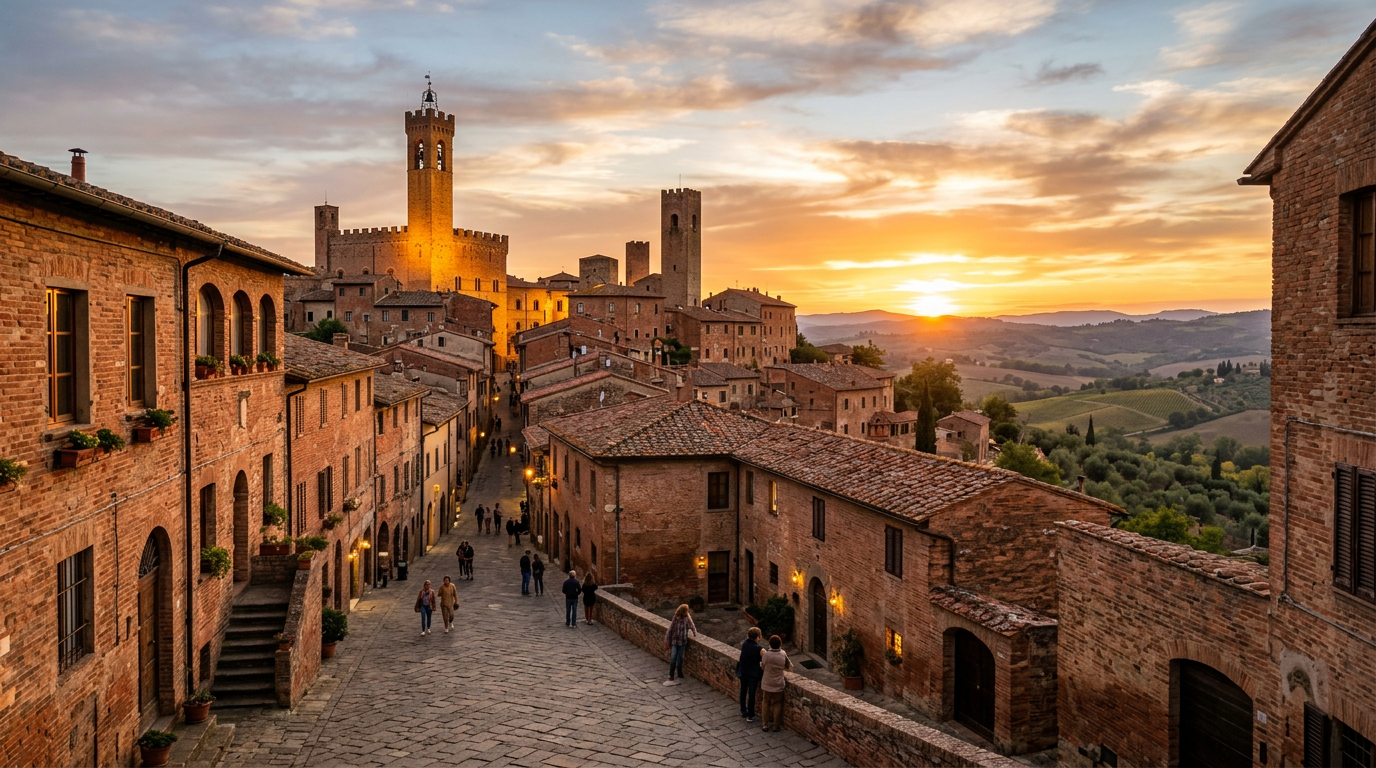
But the most beautiful thing about Certaldo Alto is simply walking: the warm afternoon light on the terracotta houses, the silence broken only by wind and church bells, the view of the green Valdelsa spreading below. An intimate and silent beauty that brings peace.
Colle di Val d'Elsa: crystal and medieval history
Colle di Val d'Elsa is divided into two parts: the lower Colle (the modern commercial centre) and the upper Colle, a medieval citadel on a hilltop ridge. In the upper Colle: the tower-house birthplace of Arnolfo di Cambio (the architect who designed Florence's Duomo), the Cathedral of Santa Maria in Canonica, the Crystal Museum.
Colle di Val d'Elsa produces 15% of the world's crystal: the local crystal factories can be visited and many shops sell beautiful and accessible Italian design crystal objects.
Casole d'Elsa and the Palazzo Pretorio museum
Casole d'Elsa, on a panoramic hill at 417 metres, is a quiet and authentic village, little known by foreign tourists. The Archaeological Civic Museum of Palazzo Pretorio holds an important collection of medieval sculptures. The Collegiate Church of Santa Maria houses important artworks.
The panorama from Casole towards the Maremma and the Tuscan coast, on clear days, is one of those moments that take your breath away.
How to Get There from Hotel La Magione
Hotel La Magione is located in Poggibonsi, in the heart of the Valdelsa. Certaldo is 10 minutes away, Colle di Val d'Elsa 10 minutes, Casole d'Elsa 25 minutes. A day in the Valdelsa is a very convenient and rich excursion, perfect also for those who want to stay away from the large crowds.Conclusion
The medieval villages of the Valdelsa are the Tuscany that many people don't yet know, but once discovered is never forgotten. Art, history, craftsmanship, landscape, gastronomy: all within a few kilometres, all accessible and enjoyable without stress.
Ready to experience Tuscany?Hotel La Magione is your perfect base.
Book your stayand let yourself be captivated by Tuscan magic.