
- The philosophy of Tuscan cuisine
- Pici: the most Tuscan pasta there is
- Ribollita: the soup of the soul
- Bistecca alla Fiorentina
- Where to eat well near Poggibonsi
- How to Get There from Hotel La Magione
- Conclusion
Eating in Tuscany is a cultural act. Every dish tells a story of a territory, a history, a family. And every Tuscan table, even the most simple, carries with it a sense of warmth and belonging that is hard to find elsewhere.
The philosophy of Tuscan cuisine
Tuscan cuisine rests on a few fundamental principles. First: the quality of ingredients always beats the complexity of the recipe. Quality extra virgin olive oil, seasonal vegetables, meat from local farms, legumes grown on the hills.
Second: "cucina povera" is not a limitation but a wonderful source of creativity. Ribollita is born from stale bread and cabbage. Pici are made with flour, water and oil. Panzanella with yesterday's bread and ripe tomatoes. Simple dishes that, in the right hands, become masterpieces of taste and memory.
Pici: the most Tuscan pasta there is
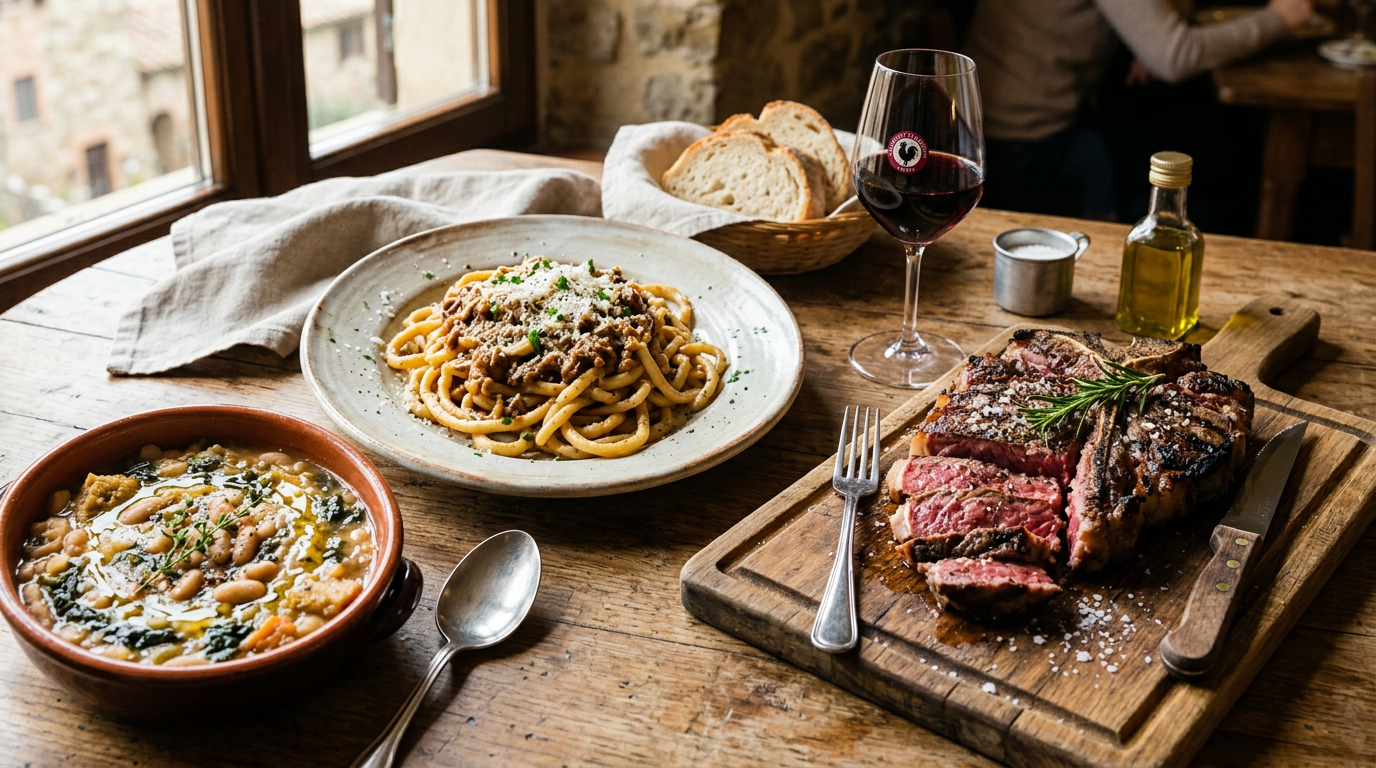
Pici are a long, irregular fresh pasta, made by hand without eggs, similar to a large rolled spaghetto. Every family has its own version, every grandmother her own technique. The classic condiment: all'aglione (with a tomato and fresh garlic sauce), cacio e pepe (in the Sienese version), with wild boar or meat ragù.
Eating them in a Tuscan trattoria, seated at a wooden table with a jug of house wine, is one of those moments that bring immediate and unfiltered happiness.
Ribollita: the soup of the soul
Ribollita is the quintessential Tuscan soup, the soup that farmers would "re-boil" for three days, becoming denser and more flavourful each time. Ingredients: black kale (cavolo nero), cannellini beans, carrots, celery, onion, stale bread, extra virgin olive oil drizzled raw.
Every area has its own version. In Florence it is more liquid. In Valdelsa it is denser, almost solid. What never changes: the drizzle of raw green oil in the plate, the freshly ground pepper, the Chianti in the glass. A deeply nourishing and comforting combination, especially in autumn and winter.
Bistecca alla Fiorentina
You cannot talk about Tuscan cuisine without mentioning the bistecca alla Fiorentina. Chianina beef (the prized Tuscan cattle breed), T-bone cut, minimum 3 cm thick, grilled strictly rare, salted only after cooking. Served with raw oil, nothing else.
It is a no-compromise dish for meat lovers. It is a sublime carnivorous experience, which in Tuscany takes on an almost ritual dimension. Don't ask for it well done: it would be an insult to tradition.
Where to eat well near Poggibonsi
Poggibonsi and the Valdelsa have several excellent trattorias and traditional restaurants. Look for those offering local cuisine, with menus that change with the seasons. The local markets (such as Saturday morning in Poggibonsi) are the best place to buy fresh products and understand what the area eats.
How to Get There from Hotel La Magione
Hotel La Magione in Poggibonsi serves a generous included breakfast every morning, with local Tuscan products. Ask at reception for recommendations on the best restaurants in the area: we are happy to help you find the right trattoria for every occasion.Conclusion
Tuscan cuisine is a heritage of humanity, not just of Italy. Every dish is a story of generations, of hands that knead, of slow fires, of carefully chosen ingredients. Eating here is an extraordinarily direct way of touching the soul of this land.Ready to experience Tuscany?Hotel La Magione is your perfect base.
Book your stayand let yourself be captivated by Tuscan magic.