
- Why Tuscan olive oil is special
- The best olive oil territories in Tuscany
- How to taste extra virgin olive oil
- Where to visit olive presses in Tuscany
- How to Get There from Hotel La Magione
- Conclusion
Nothing describes Tuscany like a drizzle of Tuscan extra virgin olive oil on a slice of toasted bread. Green, pungent, with that peppery aftertaste that lingers in the throat. It is the flavour of morning, of the farmer, of the land. It is a product carrying with it centuries of agricultural culture and a deep and visceral love for this land.
Visiting a Tuscan olive press in November, during the olive harvest, is one of the most authentic and moving experiences you can have in this region.
Why Tuscan olive oil is special
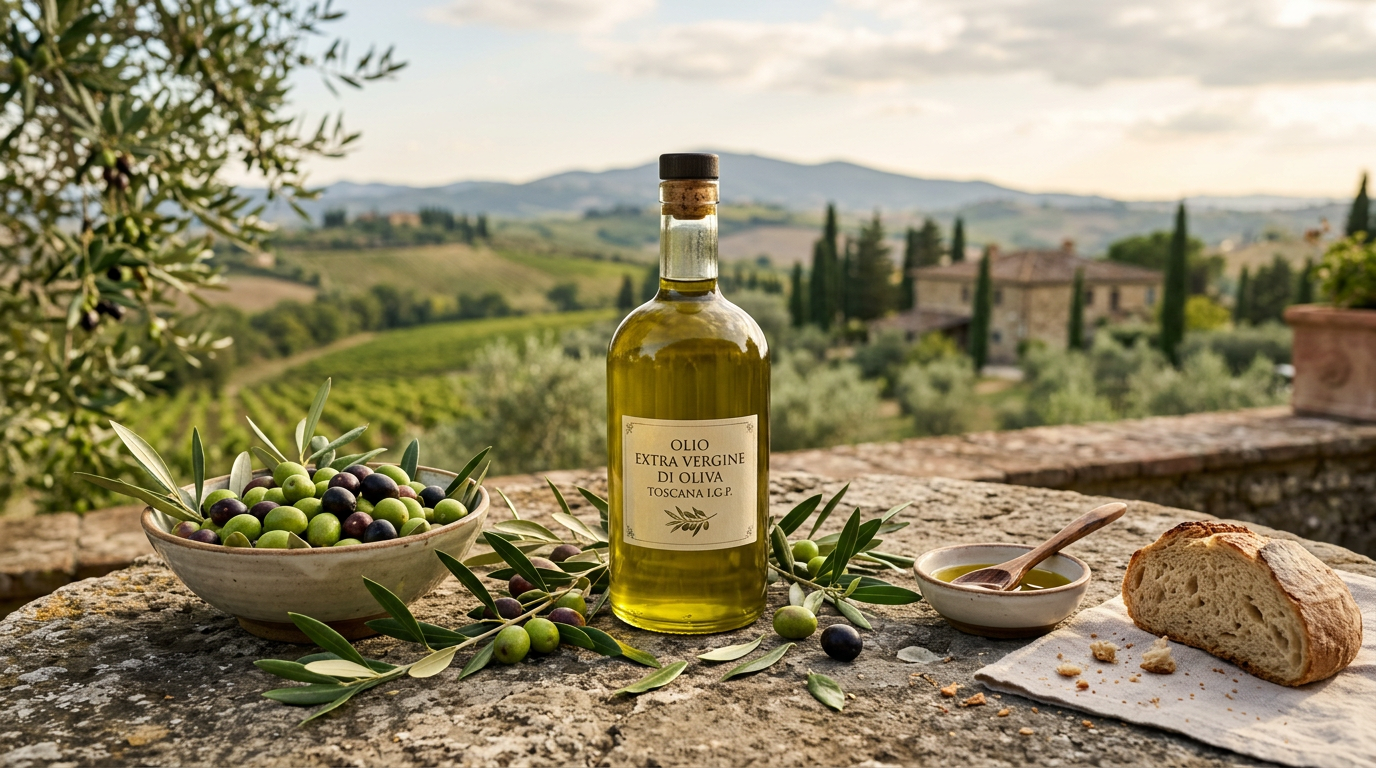
Tuscany produces some of Italy's finest extra virgin olive oils, thanks to the mild climate, limestone and clay soils, and indigenous varieties such as Frantoio, Leccino, Moraiolo and Pendolino. These olive trees grow on the hills alongside vineyards and cypress groves, creating the iconic landscape everyone recognises.
Tuscan olive oil has precise organoleptic characteristics: green-gold colour, artichoke and fresh grass aroma, fruity flavour with bitter and spicy notes. It is not a sweet and soft oil: it is an oil of character, for brave and curious palates.
The best olive oil territories in Tuscany
Each area has its own olive oil identity. The Valdelsa, where Poggibonsi is located, produces quality oils with Frantoio and Moraiolo varieties: intense fruity notes, balanced bitterness and spiciness. The Lunigiana and Garfagnana produce more delicate oils. The hills around Lucca are known for a particularly sweet and aromatic oil.
Chianti Classico is also an excellent olive oil zone: visit Chianti wineries and you will often find olive oil for sale too, produced from the same olive trees surrounding the vineyards.How to taste extra virgin olive oil
Professional olive oil tasting is called a "panel test" and follows precise rules. For a home tasting, pour the oil into a dark small glass (or cover with your palms to maintain warmth), bring to approximately 27 degrees, smell deeply, then taste.
The simplest and most wonderfully immediate way to appreciate a good Tuscan oil is on bruschetta: toasted rustic bread, rubbed with garlic, with a generous drizzle of fresh oil. In November, during the harvest, the scent of new oil is something that takes your breath away.
Where to visit olive presses in Tuscany
In October and November, many Tuscan olive presses open to the public for visits during milling. The experience is extraordinary: the olive trees laden with black and green olives, the sound of the millstones, the intense scent of fresh oil flowing. Many presses offer direct tastings, with bruschetta and local products.
In the Valdelsa area, between Certaldo, Poggibonsi and Casole d'Elsa, there are several quality presses. Look for the Tuscan Extra Virgin Olive Oil Consortium to find certified producers in your visiting area.
How to Get There from Hotel La Magione
Hotel La Magione in Poggibonsi is in the heart of the Valdelsa, one of the most interesting olive oil areas in Tuscany. Ask at reception for directions to local presses open for visits. Setting off from here to explore the world of Tuscan olive oil is easy and pleasantly surprising.Conclusion
Tuscan extra virgin olive oil is a total sensory experience: smell, taste, sight, even touch as you pour it slowly from the bottle. Taking home a few bottles is the most precious and authentic gift you can bring from Tuscany. And every time you use it in the kitchen, Tuscany will return with all its fragrance.
Ready to experience Tuscany?Hotel La Magione is your perfect base.
Book your stayand let yourself be captivated by Tuscan magic.