
- What is an educational farm in Tuscany
- Activities for children on the farm
- How to choose the right farm
- The best seasons to visit a farm
- How to Get There from Hotel La Magione
- Conclusion
Taking children to a Tuscan educational farm is one of those acts of love parents give their children: an experience that connects them with nature, teaches them where food comes from, and lets them discover the ancient and wise rhythm of farming life. Tuscany is one of Italy's best-equipped regions for this type of educational tourism.
Poggibonsi and its surroundings offer a range of certified educational farms that can turn a half-day visit into an indelible memory for the whole family.
What is an educational farm in Tuscany
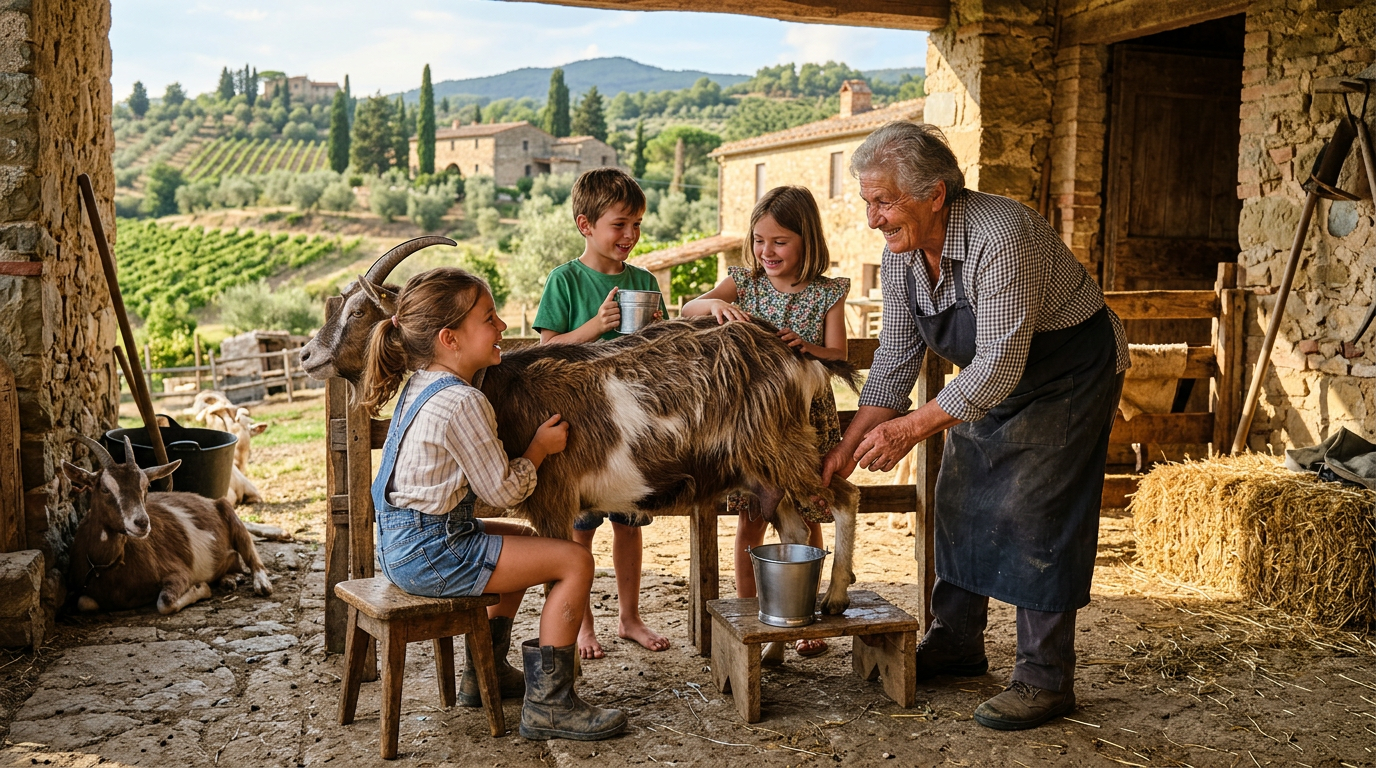
An educational farm (fattoria didattica) is an agricultural business that, alongside production, offers educational programmes for children (and adults) organised according to Tuscan regional regulations. Accredited farms follow a specific training path and offer structured activities combining play, learning and contact with nature.
Topics covered vary: nutrition and health, environmental education, biodiversity, rural culture, processing of agricultural products. Each farm has its own specialisation: some focus on dairy products, others on aromatic herbs, others on farmyard animals.
Activities for children on the farm
The activities most loved by children at Tuscan educational farms include:
Animal care: chickens, goats, donkeys, rabbits. Children learn to feed, clean the stables, recognise animal behaviours. An experience of empathy and responsibility with positive effects on emotional development.Cooking workshops: kneading bread, making pasta by hand, preparing biscuits with local wheat flour. Scents and flavours that children carry with them for years.Harvesting from the vegetable garden: recognising vegetables, understanding how they grow, picking them with their own hands. The pride of eating something you have grown is never forgotten.Craft workshops: ceramics, beeswax crafting, natural dyeing with plants from the territory.How to choose the right farm
When choosing the right educational farm, consider: your children's ages (some activities are suitable from age 3, others from 6 or older), preferred visit duration (half day or full day), and the type of experience sought (animals, cooking, nature).
Check that the farm is registered as an educational farm accredited by the Tuscany Region: this guarantees certified safety standards and educational quality. Online reviews from families who have visited are always a good indicator.
The best seasons to visit a farm
Spring (March-May): the best season. Animals have their young, fields are in bloom, days are mild. Ideal for children of all ages.Autumn (September-November): grape harvest, olive picking, mushroom foraging in the woods. Seasonal and unrepeatable experiences that teach the cycle of nature.Summer (June-August): days are long but hot. Best in the early morning. Many farms organise workshops in shaded spaces.How to Get There from Hotel La Magione
From Hotel La Magione in Poggibonsi, the area's educational farms are reachable in 15-30 minutes by car. The hotel is a comfortable and family-friendly base with free parking, pets welcome and a generous breakfast. Perfect for families with children wanting to explore the Tuscan countryside without stress.
Conclusion
A Tuscan educational farm is not just a children's attraction: it is a way of educating through beauty. The land, animals, food, work of the hands: everything converges in an experience that truly enriches, far more than any screen or video game. Give it to your children.
Ready to experience Tuscany?Hotel La Magione is your perfect base.
Book your stayand let yourself be captivated by Tuscan magic.